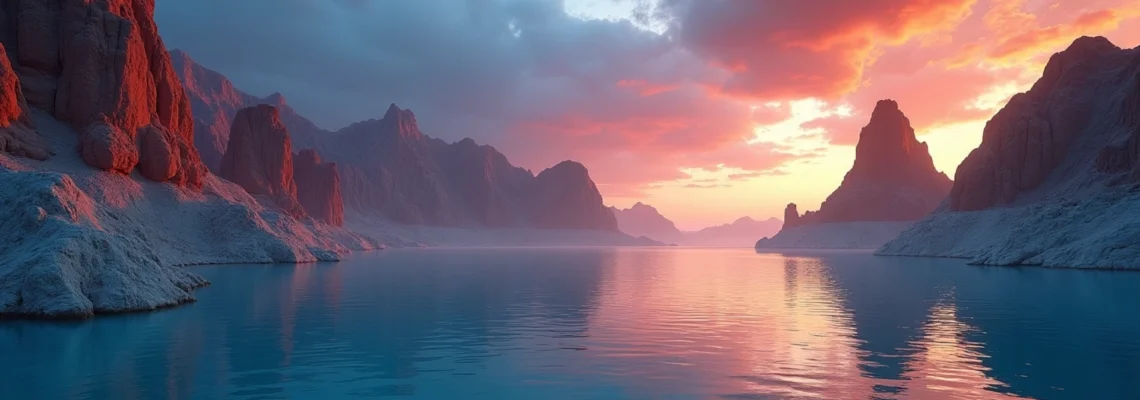
The world is full of extraordinary places that often escape the mainstream tourist radar. From otherworldly geological formations to hidden aquatic paradises, these destinations offer a glimpse into the incredible diversity of our planet. For the intrepid traveller seeking unique experiences, these lesser-known locales promise adventure, wonder, and unforgettable memories. Let’s embark on a journey to discover some of the most amazing places you might not have heard of, but should definitely consider adding to your travel bucket list.
Undiscovered geological wonders: from zhangjiajie to socotra
Nature has a way of surprising us with its incredible creations, and some of the most awe-inspiring geological wonders remain relatively unknown to the average traveller. These destinations offer a chance to witness the raw beauty of our planet’s unique landscapes.
Zhangjiajie’s otherworldly quartzite sandstone pillars
Tucked away in China’s Hunan Province, Zhangjiajie National Forest Park boasts a landscape that seems plucked from a science fiction movie. The park’s most striking feature is its towering quartzite sandstone pillars, which rise dramatically from the mist-shrouded forest floor. These incredible formations, some reaching heights of over 1,000 metres, were the inspiration for the floating mountains in James Cameron’s film Avatar .
Visitors can explore the park via an extensive network of hiking trails, or take the breathtaking Bailong Elevator, a glass lift that ascends 326 metres up the side of a cliff. For the truly adventurous, the Zhangjiajie Grand Canyon Glass Bridge offers heart-stopping views from its transparent walkway suspended 300 metres above the canyon floor.
Socotra island’s alien-like dragon blood trees
Off the coast of Yemen lies Socotra, an island that seems to belong to another world entirely. The island’s most iconic feature is its otherworldly Dragon Blood Trees ( Dracaena cinnabari ), with their distinctive umbrella-shaped canopies. These ancient trees, which can live for hundreds of years, get their name from the dark red sap they produce.
Socotra’s unique ecosystem, isolated for millions of years, has resulted in a landscape unlike any other on Earth. The island is home to numerous endemic species, with approximately 37% of its plant species found nowhere else in the world. Exploring Socotra feels like stepping into a living museum of evolutionary marvels.
Dallol, ethiopia: earth’s most colorful hydrothermal field
In the heart of Ethiopia’s Danakil Depression lies Dallol, a volcanic crater that holds the record for the hottest year-round average temperature on Earth. This extreme environment is home to one of the most visually stunning geological phenomena: a kaleidoscopic hydrothermal field.
The area’s vibrant yellows, greens, and reds are created by the interaction of hot springs, mineral deposits, and various chemical processes. Visitors to Dallol are treated to a surreal landscape of acid pools, salt formations, and geysers that defy belief. It’s crucial to note that due to the harsh conditions, visits to Dallol should only be undertaken with experienced guides and proper precautions.
Salar de uyuni: bolivia’s surreal salt flat landscape
Covering over 10,000 square kilometres in southwest Bolivia, the Salar de Uyuni is the world’s largest salt flat. During the dry season, this vast expanse of white salt creates an otherworldly landscape that seems to stretch endlessly to the horizon. However, it’s during the rainy season that Salar de Uyuni truly transforms into a natural wonder.
A thin layer of water covering the salt flat creates the world’s largest natural mirror, reflecting the sky so perfectly that it becomes impossible to distinguish where the earth ends and the heavens begin. This stunning visual effect attracts photographers and travellers from around the globe, eager to capture the surreal beauty of this unique destination.
Hidden aquatic paradises: subterranean lakes to bioluminescent bays
Water has the power to create some of the most enchanting landscapes on our planet. From hidden underground lakes to bays that glow in the dark, these aquatic wonders offer a glimpse into nature’s most magical creations.
Melissani cave: greece’s underground ionian sea gem
On the Greek island of Kefalonia, hidden beneath the surface, lies the stunning Melissani Cave. This subterranean wonder houses a lake of crystal-clear water that seems to glow an ethereal blue when sunlight streams in through the collapsed roof of the cave.
Visitors can take boat tours into the heart of the cave, marvelling at the interplay of light and water that creates an almost supernatural atmosphere. The cave’s history is as intriguing as its beauty, with ancient Greek mythology linking it to the nymph Melissani and the god Pan.
Mosquito bay: puerto rico’s bioluminescent wonder
Mosquito Bay, located on the Puerto Rican island of Vieques, is home to one of the most spectacular natural light shows on Earth. This bioluminescent bay glows an otherworldly blue at night, thanks to millions of tiny organisms called dinoflagellates that emit light when disturbed.
Kayaking or taking a boat tour on a moonless night offers an unforgettable experience, as each stroke through the water creates trails of glowing blue light. The bay’s ecosystem is delicate, and efforts are being made to preserve this natural wonder for future generations to enjoy.
Cenote ik kil: mexico’s sacred mayan sinkhole
Near the ancient Mayan city of Chichen Itza in Mexico’s Yucatan Peninsula lies Cenote Ik Kil, a stunning natural sinkhole that was once considered sacred by the Maya. This open-air cenote features crystal-clear turquoise water surrounded by lush vegetation and cascading vines.
Visitors can descend a staircase carved into the limestone to reach the water’s edge, where they can swim in the refreshing pool. The cenote’s depth of about 40 metres and its perfectly circular shape create a mesmerizing visual effect, especially when sunlight filters through the opening above.
Jellyfish lake: palau’s unique ecosystem
On the small island of Eil Malk in Palau lies a landlocked marine lake that’s home to millions of golden jellyfish. These jellyfish have evolved in isolation for thousands of years, losing their ability to sting significantly. As a result, snorkelers can safely swim among these graceful creatures.
The jellyfish in the lake migrate daily, following the sun’s path across the sky. This creates a mesmerizing spectacle as millions of translucent bodies move in unison through the emerald waters. It’s a truly unique ecosystem that offers visitors an extraordinary and intimate encounter with nature.
Off-the-grid cultural enclaves: ancient cities to modern utopias
While natural wonders captivate our imagination, human-made marvels can be equally fascinating. From ancient abandoned cities to modern experimental communities, these cultural enclaves offer insight into diverse ways of living and thinking.
Slab city: california’s last free place
In the Sonoran Desert of California lies Slab City, an off-grid community often referred to as « The Last Free Place in America ». Built on the abandoned remains of a World War II Marine barracks, this makeshift city is home to a diverse group of individuals seeking an alternative lifestyle away from mainstream society.
Visitors to Slab City can explore unique art installations like Salvation Mountain, a vibrant hillside covered in biblical messages and colorful paint, or East Jesus, an outdoor museum of experimental art. The community operates without formal electricity, running water, or sewage systems, offering a glimpse into a truly off-the-grid way of life.
Chan chan: peru’s adobe metropolis
Near the modern city of Trujillo in Peru lies Chan Chan, the largest pre-Columbian city in South America. This vast adobe city was once the capital of the Chimú Empire and housed an estimated 60,000 inhabitants at its peak. Today, the ruins of Chan Chan offer a fascinating look into the sophisticated urban planning and architectural skills of the Chimú people.
The city’s intricate friezes, elaborate water management systems, and vast ceremonial spaces showcase the advanced nature of this ancient civilization. Despite the challenges of preserving such a delicate structure, Chan Chan remains an impressive testament to the ingenuity of pre-Columbian cultures.
Kowloon walled city park: hong kong’s transformed urban jungle
Where once stood the most densely populated place on Earth now lies a serene Chinese garden. The Kowloon Walled City in Hong Kong was a unique urban experiment, a lawless enclave that grew organically into a towering maze of interconnected buildings. At its peak, over 30,000 people lived within its 2.6-hectare area.
Today, the site has been transformed into Kowloon Walled City Park, a beautiful green space that pays homage to its complex history. Visitors can explore remnants of the old city walls, view models of the former settlement, and enjoy traditional Chinese garden features, all while contemplating the dramatic transformation of this unique urban space.
Auroville: india’s experimental township
Founded in 1968, Auroville is an experimental township in southern India dedicated to the ideal of human unity. This unique community, designed to be a universal town where people from all nationalities, cultures, and beliefs can live in harmony, offers visitors a glimpse into an alternative vision of society.
At the heart of Auroville lies the Matrimandir, a striking golden sphere dedicated to the concept of inner peace and human unity. Visitors can explore the town’s sustainable practices, participate in workshops, or simply soak in the peaceful atmosphere of this utopian experiment.
Extreme climate destinations: from eternal flame to perpetual frost
Our planet is home to some truly extreme environments, places where nature’s forces create conditions that seem almost impossible for life to exist. Yet, these harsh landscapes hold a unique beauty and fascination for adventurous travellers.
Darvaza gas crater: turkmenistan’s « door to hell »
In the heart of the Karakum Desert in Turkmenistan lies a fiery spectacle that has been burning continuously for over 50 years. The Darvaza Gas Crater, also known as the « Door to Hell », is a 70-metre-wide crater that was accidentally created by Soviet geologists in 1971 when the ground beneath their drilling rig collapsed.
To prevent the spread of methane gas, the scientists decided to set the crater on fire, expecting it to burn out in a few weeks. Decades later, the flames continue to burn, creating an otherworldly sight in the middle of the desert. Visitors can camp near the crater, watching the mesmerizing flames against the backdrop of the starry desert sky.
Oymyakon: siberia’s pole of cold
In the remote Sakha Republic of Russia lies Oymyakon, officially recognized as the coldest permanently inhabited place on Earth. This small village experiences winter temperatures that can plummet to -60°C (-76°F), creating a landscape of perpetual frost and challenging living conditions.
Despite the extreme cold, life in Oymyakon continues. Visitors brave enough to endure the frigid temperatures can experience unique phenomena like frozen eyelashes, instant ice cream (just by stepping outside), and the surreal beauty of a landscape shaped by relentless cold. The village also offers insights into the resilience of its inhabitants and their adaptation to this harsh environment.
Danakil depression: ethiopia’s hottest place on earth
The Danakil Depression in Ethiopia is often described as the hottest place on Earth, with daytime temperatures regularly exceeding 50°C (122°F). This inhospitable landscape is a geological wonder, featuring active volcanoes, vast salt pans, and acidic hot springs that create a palette of surreal colors.
Despite its extreme conditions, the Danakil Depression is home to the Afar people, who have adapted to life in this harsh environment. Visitors can witness the traditional salt mining techniques that have been practiced for centuries and marvel at the otherworldly landscapes shaped by intense heat and geological activity.
Architectural marvels hidden in plain sight
Human creativity knows no bounds, and sometimes this results in architectural wonders that defy conventional design. From whimsical houses to massive urban structures, these hidden marvels showcase the incredible diversity of human imagination.
Hang nga guesthouse: vietnam’s « crazy house »
In the mountain town of Dalat, Vietnam, stands an architectural wonder that looks like it’s straight out of a fairy tale. The Hang Nga Guesthouse, commonly known as the « Crazy House », is a fantastical structure designed by Vietnamese architect Dang Viet Nga.
This unconventional building features organic, tree-like forms, cave-shaped rooms, and numerous unexpected details that create a surreal, dreamlike atmosphere. Visitors can explore the twisting corridors, climb through oddly-shaped windows, and even stay overnight in one of the uniquely themed guest rooms.
Metropol parasol: seville’s massive wooden structure
In the heart of Seville, Spain, stands an enormous wooden structure that seems to defy gravity. The Metropol Parasol, locally known as Las Setas de Sevilla (The Mushrooms of Seville), is the world’s largest wooden structure, covering an area of 12,000 square metres.
This innovative architectural project, completed in 2011, consists of six parasols in the form of giant mushrooms. Visitors can walk along the winding walkways on top of the structure, enjoying panoramic views of the city. Beneath the parasols, you’ll find an archaeological museum, a farmer’s market, and an elevated plaza, making it a true multi-functional urban space.
Crooked forest: poland’s mysterious bent pine trees
Near the town of Gryfino in western Poland lies a peculiar grove of pine trees known as the Crooked Forest. This small woodland contains about 400 pine trees that are bent at a 90-degree angle near their base, all curved northward.
The origin of this unusual forest remains a mystery, with theories ranging from deliberate human shaping to the effects of heavy snowfall or strong winds. Whatever the cause, the result is a surreal landscape that seems to defy the laws of nature. Visitors can walk among these twisted trees, pondering the enigma of their formation.
Las pozas: edward james’ surrealist garden in mexico
Hidden in the Mexican jungle near the town of Xilitla lies Las Pozas, a surrealist sculpture garden created by British poet and artist Edward James. This 80-acre site features a series of fantastical concrete structures, spiral staircases that lead nowhere, and whimsical sculptures integrated with the lush natural surroundings.
James spent decades creating this « Surrealist Xanadu », pouring his imagination and fortune into the project. Today, visitors can explore this dreamlike landscape, where man-made structures and nature intertwine in surprising and beautiful ways. Las Pozas stands as a testament to the power of unfettered creativity and the enduring appeal of surrealist art.
These amazing places offer a glimpse into the incredible diversity of our world, from natural wonders to human-made marvels. They remind us that there’s always something new to discover, even in a world that seems fully explored. Whether you’re drawn to geological wonders, hidden aquatic paradises, cultural enclaves, extreme environments, or architectural oddities, these destinations promise unique experiences that will leave lasting impressions. As you plan your future travels, consider venturing off the beaten path to explore some of these extraordinary locations.